What Are China Top Energy Storage Systems Manufacturers?

China has become a central force in the global Energy Storage Systems market. The International Energy Agency’s 2024 Batteries and Secure Energy Transitions report states that China produces more than three-quarters of the world’s lithium-ion batteries. This manufacturing depth supports competitive pricing, faster delivery, and broad product selection. It also creates a difficult question: which companies truly lead?

The answer depends on the product layer. CATL and BYD are widely recognized for battery cells and integrated storage platforms. Huawei Digital Power, Sungrow, and Sineng Electric have strong positions in power conversion systems, inverters, and grid-connected solutions. Envision Energy, CRRC Zhuzhou Institute, and HyperStrong also deserve attention for utility-scale projects, controls, and system integration. China Energy Storage Alliance data reported approximately 31.39 GW and 66.87 GWh of cumulative new energy storage capacity in China by the end of 2023, excluding pumped storage. That figure shows market scale, not automatic product quality.

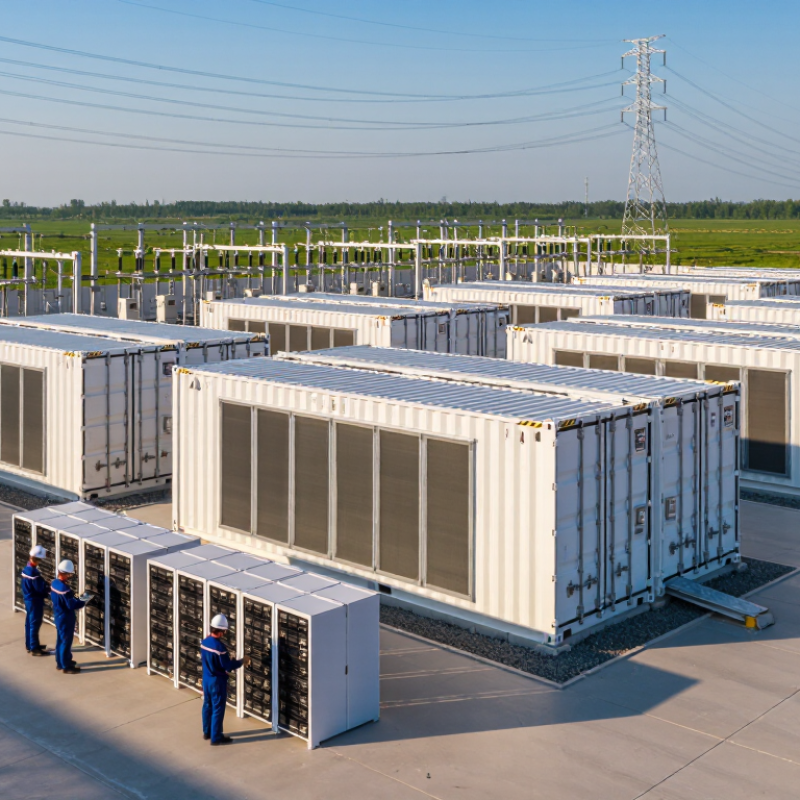
No single league table is perfect. Rankings change with shipment definitions, project geography, and whether battery cells are counted separately. BloombergNEF, Wood Mackenzie, and S&P Global often use different methods. Buyers should therefore examine bankability, safety testing, degradation guarantees, software performance, and after-sales service. A container may look impressive in a photograph. Its thermal management records matter more.

This guide evaluates China’s leading manufacturers through those practical measures. It considers proven deployments, certifications, supply-chain control, and technical transparency. Some conclusions remain debatable. That is normal in a fast-changing industry. Reliable comparison requires evidence, not just impressive capacity claims.
What Are China Top Energy Storage Systems Manufacturers?

China’s Energy Storage Industry: Scope, Development, and Market Structure

China’s energy storage industry is expanding from pilot projects into large commercial systems. The National Energy Administration reported over 73 GW of new-type storage capacity by the end of 2024. Lithium-ion batteries represented most installations, while flow batteries and compressed-air projects gained attention. The International Energy Agency also notes China produced nearly 80% of global battery cells in 2023.

The market structure includes battery-cell producers, power-conversion equipment makers, system integrators, and energy-management software providers. Utility-scale projects remain the largest demand source. Industrial and commercial storage is growing near factories, logistics parks, and solar facilities. Leading manufacturers are usually judged by safety records, round-trip efficiency, delivery capacity, and long-term service. CNESA data shows China’s new energy storage installations continued rapid growth in 2024, but reported figures vary by definition. That inconsistency deserves more attention.

Tips: Compare usable capacity, not only rated capacity. Check warranty conditions, thermal monitoring, fire protection, and grid-support functions. Ask for independently verified performance data. A low purchase price may hide higher maintenance costs. Policy support remains important, yet market revenues are still uneven across provinces. This is the industry’s uncomfortable weakness.
How China’s Energy Storage Systems and Technologies Are Classified

What Are China Top Energy Storage Systems Manufacturers?

How China’s Energy Storage Systems and Technologies Are Classified

China’s energy storage industry is not classified by manufacturer names alone. It is grouped by storage technology, discharge duration, capacity, and application. The main category is electrochemical storage. Lithium-ion systems dominate many projects because they offer high energy density and fast response. Sodium-ion systems are emerging where cost and material availability matter. Flow batteries serve longer-duration applications, especially when repeated cycling is expected.

Other categories include mechanical, thermal, and hydrogen-based storage. Pumped hydro uses elevation and water movement. Compressed-air systems store energy underground or in large pressure vessels. Thermal storage holds heat for later use, often in industrial facilities. Hydrogen systems convert electricity into hydrogen, then release energy through fuel cells or turbines. These technologies have different efficiency, installation needs, and maintenance risks. The classification is useful, but it is not perfect. One system may fit several categories.

Tips: Check the complete technical datasheet, not only the advertised capacity. Confirm usable energy, cycle life, operating temperature, cooling design, and emergency controls. Ask for independent test records and documented compliance with local grid requirements. During site visits, inspect cable routing, ventilation, fire separation, and monitoring alarms. A lower purchase price can hide replacement costs. I have seen projects judged too quickly. Field conditions often change the result.

What Are China Top Energy Storage Systems Manufacturers? - How China’s Energy Storage Systems and Technologies Are Classified

Technology Class Typical Technology Typical Storage Duration Round-Trip Efficiency Typical Service Life Main Advantages Common Applications in China
Electrochemical Lithium iron phosphate (LFP) 1–4 hours 85–95% 10–20 years; approximately 3,000–8,000 cycles depending on operating conditions High thermal stability, long cycle life, relatively low cost, and strong suitability for stationary storage Renewable-energy integration, grid peak shifting, frequency regulation, commercial and industrial storage
Electrochemical Nickel manganese cobalt (NMC) lithium-ion 1–4 hours 85–95% 8–15 years; approximately 1,500–4,000 cycles High energy density and compact system footprint Space-constrained commercial systems, fast-response grid services, and applications requiring high energy density
Electrochemical Sodium-ion batteries 1–6 hours 80–92% 10–15 years; cycle life varies by cell chemistry and design Uses more widely available raw materials, performs relatively well at low temperatures, and can reduce dependence on lithium Short-duration renewable storage, low-temperature regions, and cost-sensitive stationary systems
Electrochemical Vanadium redox flow batteries 4–12 hours or longer 65–85% 15–25 years; commonly more than 10,000 cycles Long cycle life, low degradation, nonflammable aqueous electrolyte, and independent power and energy scaling Long-duration renewable integration, microgrids, and utility-scale load shifting
Electrochemical Lead-acid batteries Minutes to 4 hours 70–85% 3–10 years; typically fewer cycles than lithium-ion systems Mature supply chain, low initial cost, and established recycling infrastructure Backup power, telecommunications, substations, and small-scale distributed systems
Mechanical Pumped-storage hydropower 6–20 hours or longer 70–85% 40–80 years with appropriate maintenance Very large capacity, long operating life, and proven grid-scale performance Bulk energy storage, peak regulation, frequency control, and renewable-energy balancing
Mechanical Compressed-air energy storage 4–24 hours Approximately 50–70% for conventional systems; advanced designs may be higher 20–40 years, depending on equipment and cavern conditions Large-scale capacity, long duration, and reduced reliance on electrochemical materials Utility-scale peak shifting and storage at locations with suitable geological or above-ground reservoirs
Electrical Supercapacitors Seconds to minutes 85–98% More than 100,000 cycles is typical Extremely fast response, high power density, and very long cycle life Power-quality control, regenerative braking, voltage support, and short-duration frequency regulation
Thermal Molten-salt thermal energy storage 4–15 hours Thermal-to-electric efficiency commonly 30–45%; varies by system configuration 20–30 years for major plant equipment High-temperature operation, long duration, and suitability for dispatchable solar-thermal generation Concentrated solar power, industrial heat supply, and selected grid-support applications
Hydrogen and Chemical Power-to-hydrogen systems Hours to seasonal storage Approximately 25–45% electricity-to-electricity, depending on reconversion pathway Electrolyzer and fuel-cell life depends on operating hours, maintenance, and technology Suitable for long-duration or seasonal storage and can provide industrial fuel or feedstock Renewable-hydrogen production, industrial decarbonization, backup generation, and seasonal energy balancing

Note: Performance figures are indicative industry ranges. Actual results vary with system design, ambient temperature, depth of discharge, operating strategy, site conditions, and auxiliary equipment.

Leading Chinese Energy Storage System Manufacturers and Their Strengths

China’s leading energy storage system manufacturers cover cells, battery packs, power conversion systems, and complete containerized solutions. Their main strength is manufacturing scale. Large production lines can reduce delivery times and support stable pricing for utility, commercial, and residential projects.

Experienced manufacturers usually offer lithium iron phosphate systems, liquid cooling, remote monitoring, and modular cabinet designs. These features matter in real projects. A well-designed cabinet can simplify installation in a narrow plant room. Accurate thermal control can also protect performance during repeated summer charging cycles. Manufacturers with strong engineering teams often adapt voltage, software, and communication protocols to local grid conditions.

Technical reliability requires more than factory capacity. Buyers should examine testing records, fire protection design, warranty terms, spare-part access, and service response times. Some Chinese suppliers provide detailed digital monitoring, but documentation may still feel unclear across different markets. That weakness deserves attention. Language support and local maintenance training can affect uptime as much as battery quality. Factory audits, sample testing, and pilot installations offer practical evidence before a large order. Cost remains a major advantage, but the cheapest proposal is not always the safest long-term choice.

Key Products, Applications, and Manufacturing Capabilities

China’s leading energy storage system manufacturers build solutions for homes, factories, data centers, and utility grids.

Their key products include lithium-ion battery cabinets, containerized systems, battery management units, and integrated power conversion equipment. Some factories also produce thermal management systems and fire protection components. These details matter in hot, humid, or dusty locations.

Manufacturing capability should be judged beyond production volume. Reliable suppliers control cell testing, module assembly, software integration, and end-of-line inspection. They should provide traceable test records, safety documentation, and evidence of relevant international certifications.

A factory visit can reveal practical details, such as cable routing, cleanliness, spare-parts storage, and response time during technical faults. Paperwork alone is not enough.

Tips: Ask for real operating data. Check capacity degradation, round-trip efficiency, warranty limits, and replacement procedures. Request a sample monitoring screen before signing a contract. Small details often expose large risks.

Application fit remains essential.

A residential system may prioritize quiet operation and backup power, while a utility project needs fast dispatch, grid coordination, and remote monitoring. Commercial facilities often require peak shaving, solar integration, and predictable maintenance costs.

I would compare several suppliers using the same technical checklist. No manufacturer is perfect. Some published performance figures may reflect controlled conditions, not winter mornings or overloaded sites. Independent testing and clear service responsibilities can make the difference.

How to Evaluate China’s Energy Storage System Suppliers

What Are China’s Top Energy Storage System Manufacturers?

Evaluating China’s energy storage system suppliers requires more than comparing price per kilowatt-hour. The IEA reported that global battery storage additions exceeded 40 GW in 2023, rising about 130% year on year. This rapid growth makes supplier selection more important, not easier. Request factory audit records, production traceability, and verified project references. A convincing presentation is not proof.

Technical checks should begin with the battery cell, thermal management, fire protection, and battery management system. Ask for independent test reports, round-trip efficiency, cycle-life data, and degradation assumptions under local temperatures. UL, IEC, and grid-compliance documentation should match the target market, not merely appear in a brochure. BloombergNEF’s 2024 energy storage research highlighted falling system costs, but low prices can hide weaker warranties or limited service capacity. Cheap is not always efficient.

Review the warranty carefully. It should define usable capacity, operating limits, response times, and replacement responsibilities. Inspect how the supplier handles alarms, software updates, spare parts, and remote monitoring. Financial strength matters too, because storage projects may operate for fifteen years or longer. Some evaluations still overvalue nameplate capacity. That is a mistake. A smaller system with stable thermal performance may deliver more dependable energy. The uncomfortable question is whether the supplier can support the project after installation, not simply ship equipment on time.

How to Evaluate China’s Energy Storage System Suppliers

Use this practical procurement framework to compare suppliers without relying only on price. Technical performance and safety should receive the greatest weight, followed by lifecycle economics, compliance, delivery capability, and service support.

Stop Paying More for Power

Utility rates rise 4–6% every year. Solar converts that rising expense into an asset that can pay for itself, and once it’s paid off, your power is essentially free. Many property owners qualify with no money out of pocket.