2026 How to Choose the Best Photovoltaic Solar Systems for Your Home?
Choosing the best Photovoltaic Solar Systems for your home requires careful consideration. With the rising energy costs and growing environmental concerns, solar power has become an appealing option. But not all systems are created equal. It’s essential to understand what makes a system effective.
When evaluating Photovoltaic Solar Systems, think about efficiency, space, and budget. Some systems may promise high performance but fall short in real-world conditions. Research reputable brands and read customer reviews. This helps you gauge reliability and performance in various climates.
Consider consulting with experienced professionals. They can offer insights tailored to your specific needs. Don't rush into a decision; take your time to explore different options. Reflect on your energy consumption habits and how much sunlight your location receives. Understanding these factors profoundly impacts your choice.
Understanding Photovoltaic Solar Systems: Key Components Explained
When choosing a photovoltaic solar system, it's crucial to understand its key components. Solar panels are the most visible element. They convert sunlight into electricity. Each panel consists of photovoltaic cells. These cells determine efficiency and energy output. Look for panels that maximize space and offer durability.
Inverters are another essential component. They convert the direct current (DC) from the panels to alternating current (AC) for home use. Different types exist, including string inverters and microinverters. Each type has its pros and cons. Selecting the right inverter can significantly impact your system's performance.
Finally, consider the mounting system. The way panels are installed affects energy production. A poor installation might lead to inefficiencies. It’s important to evaluate shading, angle, and orientation. Each factor can influence how much sunlight the panels capture. Ensuring a proper setup may require professional help. This choice can ultimately enhance or hinder long-term benefits.
2026 How to Choose the Best Photovoltaic Solar Systems for Your Home?
| Component |
Description |
Typical Lifespan (Years) |
Average Cost ($) |
| Solar Panels |
Convert sunlight into electricity. |
25-30 |
15,000 - 30,000 |
| Inverter |
Converts DC electricity to AC electricity. |
5-10 |
1,000 - 3,000 |
| Mounting System |
Structures to hold solar panels in place. |
20-25 |
1,000 - 2,500 |
| Battery Storage |
Stores excess energy for use when needed. |
5-15 |
5,000 - 10,000 |
| Charge Controller |
Regulates voltage and current from solar panels. |
5-10 |
200 - 600 |
Assessing Your Energy Needs: Calculating Consumption and Savings
When considering photovoltaic solar systems, understanding your energy needs is crucial. Begin by assessing your current electricity consumption. The average U.S. household uses about 877 kWh monthly, translating to roughly 10,500 kWh annually. A detailed energy audit can pinpoint where energy is wasted and how to optimize usage.
Tips: Track monthly utility bills for trends. Identify peak usage times and the devices consuming the most energy.
Calculating potential savings helps in decision-making. According to the U.S. Department of Energy, homeowners can save between $10,000 to $30,000 over 20 years with solar energy. Consider local incentives and tax benefits when evaluating overall costs.
Tips: Consult utility providers about net metering options. Understand how solar aligns with your financial and environmental goals.
Evaluating Different Types of Solar Panels: Pros and Cons
When considering solar panels for your home, evaluating different types is essential. Monocrystalline panels are efficient and space-saving. They work well in various conditions. However, their higher cost might not suit every budget. Polycrystalline panels are a popular choice, offering a balance between efficiency and price. They generally cost less but may require more space for installation.
Thin-film panels are another option. They are lightweight and flexible. This makes them easy to install in unconventional spaces. However, they have lower efficiency rates compared to crystalline panels. While thin-film is affordable, you might need more panels to generate the same power.
Tips: Before making a decision, assess your roof's sunlight exposure. Consider the local climate too. Not all panels perform equally in every environment. It's worth exploring energy needs and long-term goals. This step can lead to a better investment. Research local incentives for solar energy. They can significantly reduce initial costs.
2026 Best Photovoltaic Solar Systems Comparison
Choosing the Right Inverter: Essential for System Efficiency
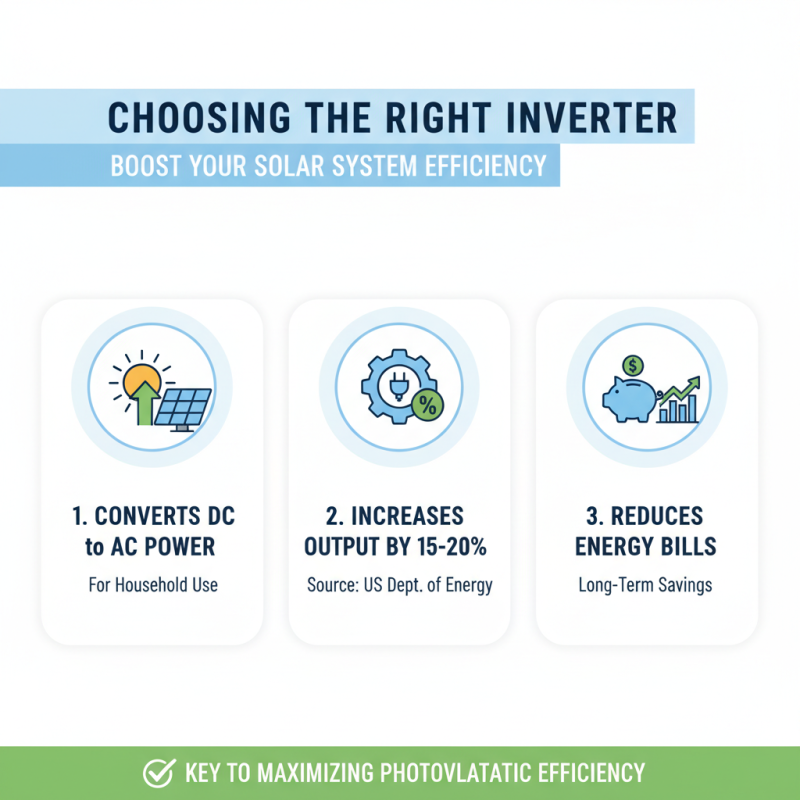
Choosing the right inverter is crucial for maximizing the efficiency of your photovoltaic solar system. An inverter converts the direct current (DC) from solar panels into alternating current (AC) for household use. According to the U.S. Department of Energy, a well-chosen inverter can increase overall system output by 15-20%. This efficiency gain can significantly impact your energy bills over time.
However, not all inverters are created equal. When selecting an inverter, consider its efficiency rating, which typically ranges from 95% to 99%. A higher rating usually means less energy loss during conversion. Pay attention to potential installation issues as well. A poorly installed inverter can negate efficiency benefits and lead to unnecessary costs.
Moreover, ongoing maintenance and monitoring are vital. Regularly check system performance and inverter function. Reports indicate that failing to monitor inverter performance can result in a 25% decrease in energy production annually. This highlights the importance of ongoing vigilance beyond initial installation. Investing time in understanding your inverter options can ensure long-term reliability and efficiency.
Exploring Installation Options: DIY vs. Professional Services
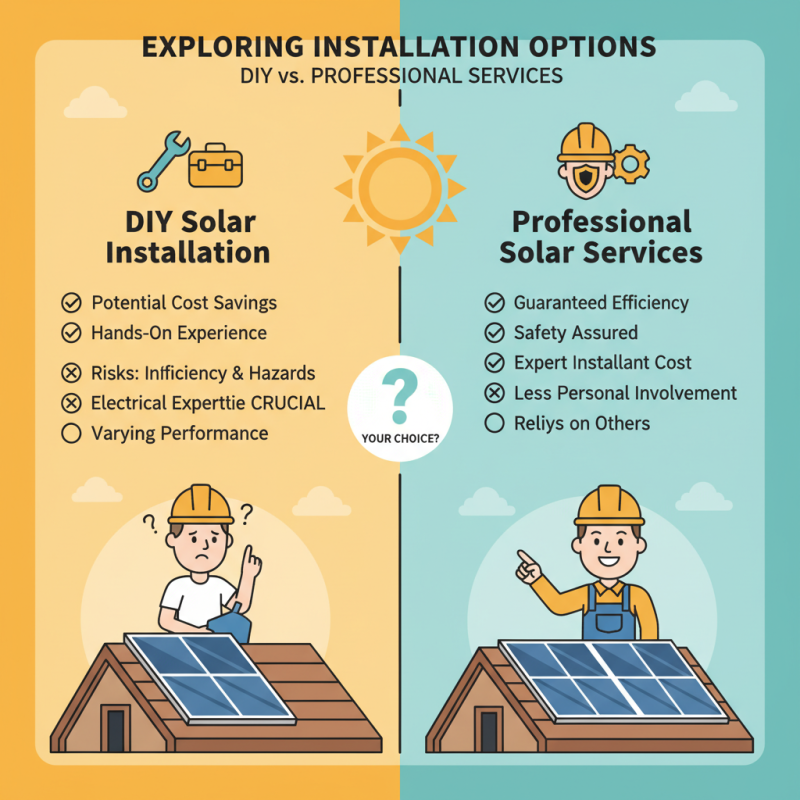
When considering solar system installation, you'll face a choice between DIY and hiring professionals. DIY installations can be appealing due to potential cost savings. If you’re handy, it could be a fulfilling project. You gain firsthand experience and knowledge about how the system works. However, this path comes with risks. Missteps can lead to inefficiencies or even safety hazards. Expertise in electrical systems is crucial. Without it, the solar installation could vary in performance.
On the other hand, professional services offer reliability and peace of mind. Experienced installers know local regulations and best practices. They ensure that your system is correctly sized for your energy needs. Professional services also provide warranties and ongoing support. This may save you from future headaches. Yet, hiring professionals can strain your budget. Be sure to weigh the long-term benefits against the costs. Each option has merits that require careful consideration. Assess your skills, budget, and desire for guidance before deciding.