
Solar Panel Removal and Reinstall for Roof Replacement in Florida
If you’re replacing your roof and already have solar panels installed, you’ll likely need solar panel removal and reinstall during the process. When planned correctly,

When the lights go out, a refrigerator becomes a quiet food-safety test. The key question is not only “how long can a fridge last without power,” but also whether its contents remain safely chilled. According to the U.S. Food and Drug Administration, an unopened refrigerator generally keeps food cold for about four hours. That estimate assumes the door stays closed and the appliance was operating normally before the outage.
The USDA Food Safety and Inspection Service advises keeping refrigerated food at 40°F (4°C) or below. After four hours without power, perishable foods may need careful evaluation or disposal. Meat, seafood, eggs, dairy products, and prepared leftovers deserve special attention. A half-full freezer may hold a safe temperature for roughly 24 hours, while a full freezer can last about 48 hours, according to USDA guidance. These figures are useful, not absolute.
Room temperature changes everything.
A hot kitchen, frequent door opening, or an aging door seal can shorten that window. A refrigerator thermometer provides stronger evidence than touch or smell. Food can look normal and still contain harmful bacteria. This guide presents seven practical tips for managing an outage, protecting food, and restarting the appliance safely. It also recognizes an uncomfortable truth: household estimates are often imperfect. The safest decision may involve discarding food, even when waste feels frustrating. The FDA, USDA, and ENERGY STAR all emphasize preparation, temperature control, and limited door opening during power interruptions.
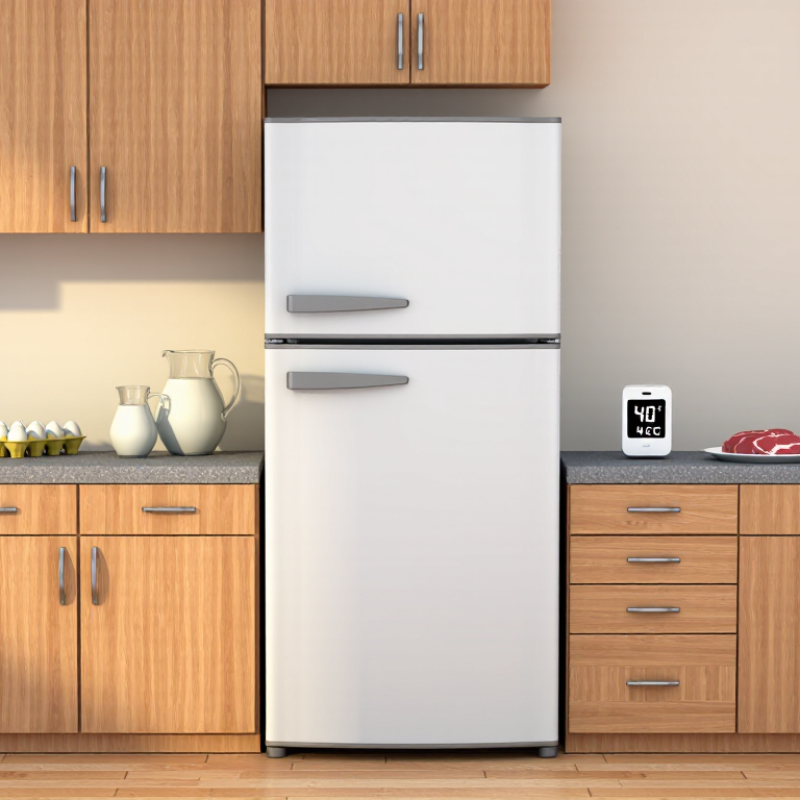
A closed refrigerator usually keeps food safe for about four hours without power. This estimate assumes the door stays shut and the room is not unusually hot. Every opening releases cold air, so check only when necessary. A refrigerator thermometer gives better evidence than touch. Food may feel cool while unsafe bacteria grow silently.
Perishable items include meat, poultry, seafood, eggs, milk, soft cheese, and cooked leftovers. Discard them if they remain above 40°F (4°C) for more than two hours. If the room exceeds 90°F (32°C), use a one-hour limit. Never taste food to test it. Smell can mislead you. Place a sealed container of ice inside the refrigerator if available, and keep raw meat away from ready-to-eat food.
A full freezer can hold a safe temperature for roughly 48 hours, while a half-full freezer may last about 24 hours. Keep the door closed. Ice crystals often show that food stayed partly frozen, but they do not prove complete safety. Refreeze food only when it still contains ice crystals or remains at 40°F (4°C) or below. I used to trust a cold package without checking its center, but that shortcut was unreliable. When uncertain, throw it away. Waste is frustrating, yet foodborne illness can be far more serious.
How Long Can a Fridge Last Without Power?
A closed refrigerator usually stays cold for about four hours without electricity. That estimate is only a starting point. Seven factors can change it: room temperature, door openings, food quantity, food temperature, insulation, door-seal condition, and appliance age. A cool, shaded kitchen helps. A hot room works against you.
Keep the door closed. Every opening lets warm air replace chilled air. A full refrigerator also holds cold longer than an empty one. Cold food acts like ice packs. However, newly cooked meals raise the internal temperature quickly. I once trusted the four-hour rule too casually. That shortcut was wrong in a warm room.
Use a refrigerator thermometer, not your hand. Food should generally remain at or below 4°C (40°F). A damaged seal may feel loose or show condensation around the gasket. Older appliances can lose cold faster, especially when their insulation has weakened. A freezer packed with food usually holds frozen temperatures longer than a half-empty one. A full freezer may stay cold for about 48 hours, while a partly full freezer may last about 24 hours. Check appearance carefully, but do not taste questionable food. When in doubt, discard it.
| Key Factor | How It Affects Temperature | Typical Impact or Guideline | Best Practical Action |
|---|---|---|---|
| 1. Length of the Power Outage | Cold air is gradually lost after the cooling system stops, and food temperature rises over time. | An unopened refrigerator generally keeps food cold for about 4 hours. A full freezer can usually remain cold for about 48 hours, while a half-full freezer may last about 24 hours. | Keep the doors closed and begin checking food safety as soon as power is restored. |
| 2. Frequency of Door Opening | Every opening allows warm room air to enter and cold air to escape, accelerating temperature rise. | Repeated or prolonged opening can shorten the safe cooling period considerably compared with an unopened appliance. | Open the refrigerator or freezer only when necessary. Prepare an emergency food plan in advance. |
| 3. Amount of Food Inside | Cold food acts as thermal mass and helps maintain a stable temperature during a power interruption. | A well-stocked freezer generally stays cold longer than an empty or lightly stocked freezer. Overpacking, however, can restrict air circulation during normal operation. | Keep the freezer reasonably full, leaving enough space for air to circulate around the food. |
| 4. Starting Temperature | Food that starts thoroughly chilled gives the appliance a larger temperature buffer before reaching unsafe conditions. | Refrigerator food should normally be stored at or below 40°F (4°C). Frozen food should normally be kept at approximately 0°F (-18°C). | Do not place hot food inside shortly before an expected outage, and use an appliance thermometer to monitor conditions. |
| 5. Room Temperature | A refrigerator loses heat more quickly in a hot room and more slowly in a cool room. | Direct sunlight, hot kitchens, poor ventilation, or outdoor heat can reduce the time food remains cold. The standard 4-hour refrigerator guideline assumes the door remains closed. | Keep the appliance away from direct sunlight and heat-producing equipment. Never place perishable food outdoors as a substitute for refrigeration. |
| 6. Insulation and Appliance Condition | Door seals, cabinet insulation, appliance age, and general condition determine how effectively cold air is retained. | A damaged gasket, loose door, or poorly insulated cabinet can cause temperatures to rise faster than expected. | Check that the door closes tightly, inspect the gasket for gaps, and replace damaged seals when needed. |
| 7. Ice Packs and Backup Cooling | Frozen water and ice packs absorb heat as they warm, helping protect refrigerated or frozen food. | Adding ice can extend the cooling period, but it does not guarantee that food remains safe. Perishable food should be discarded if it has been above 40°F (4°C) for 2 hours or more, or for 1 hour when the surrounding temperature is above 90°F (32°C). | Use clean ice or frozen gel packs, place them around perishable food, and verify the temperature with a food or appliance thermometer. |
7 Best Tips How Long Can a Fridge Last Without Power?
Seven Practical Ways to Keep Food Cold During an Outage
A closed refrigerator usually keeps food cold for about four hours. Use a refrigerator thermometer to check the temperature, not your hand. Keep the door shut as much as possible. That is the simplest protection. Move milk, meat, and eggs together on the lowest shelf. This creates a colder block and limits warm air movement. Add sealed bags of ice if available. Place a towel underneath to catch melting water.
Fill empty spaces with ice packs, frozen bottles, or containers of cold water. A fuller fridge changes temperature more slowly. Transfer highly perishable food to an insulated cooler before the refrigerator becomes warm. Keep the cooler in the coolest indoor area, away from sunlight and ovens. Open it briefly and only when necessary. I once opened a cooler repeatedly to check the food, which wasted cold faster than expected.
Use a separate thermometer inside the cooler. Keep food at 4°C or below. If the freezer is full, food may stay frozen for about 48 hours; a half-full freezer may last about 24 hours. Put a blanket around the freezer, but do not cover vents or electrical parts. When power returns, discard food that stayed above 4°C for too long. Never taste food to judge safety. Smell can mislead you. A written time log helps, though I often forget it unless the outage lasts overnight.
An unopened refrigerator keeps food cold for about 4 hours. A fully stocked freezer can remain cold for approximately 48 hours, while a half-full freezer generally lasts about 24 hours. Keep doors closed, move food to a cooler with ice, group frozen items together, and use a food thermometer before eating.
Safety reference: Perishable food held above 4°C (40°F) for more than 2 hours should be discarded; the limit is 1 hour when temperatures exceed 32°C (90°F).
When the power fails, the clock matters more than the fridge light. USDA Food Safety and Inspection Service guidance says refrigerated perishable food is generally safe for up to four hours without power. Keep the door closed. A full freezer can hold a safe temperature for about 48 hours, while a half-full freezer lasts roughly 24 hours. These figures assume the door stays shut.
Check the temperature before checking the food. The FDA recommends keeping a refrigerator at 40°F (4°C) or below. Use a food thermometer, not appearance or smell. If meat, eggs, seafood, milk, or cooked leftovers stayed above 40°F for two hours, discard them. The limit drops to one hour when room temperatures exceed 90°F. It feels wasteful, but harmful bacteria can grow without changing the food’s smell.
Look for ice crystals in frozen food, but do not treat them as absolute proof of safety. The USDA notes that partially frozen food may be refrozen or cooked if it still contains ice crystals or remains at 40°F or below. Separate leaking packages and clean nearby surfaces with hot, soapy water. I have found that guessing becomes tempting during a long outage. That is the weak point. Record the outage time, avoid tasting questionable food, and discard anything with an uncertain temperature history. A cheap appliance thermometer can prevent that decision later.
Do not reopen the refrigerator repeatedly when electricity returns. Let the internal temperature stabilize first. The USDA Food Safety and Inspection Service states that an unopened refrigerator keeps food safe for about four hours. A full freezer can hold a safe temperature for approximately 48 hours, while a half-full freezer lasts about 24 hours.
Check the temperature with an appliance thermometer. The refrigerator should read 40°F (4°C) or below, and the freezer should reach 0°F (-18°C).
Discard meat, seafood, eggs, dairy products, and cooked leftovers that stayed above 40°F for two hours or longer. Never taste food to judge safety. Smell is unreliable. That shortcut can fail.
Frozen food with ice crystals, or food measured at 40°F or below, may usually be refrozen, according to USDA guidance. Quality may decline, especially in soft fruit and prepared meals. Clean leaking packages, shelves, and drawer surfaces with hot, soapy water. Wash your hands afterward.
The FDA Food Code also emphasizes strict temperature control for perishable foods. A common mistake is trusting a cold-looking shelf without measuring it. I have made that assumption before.
Replace or reposition the thermometer, then monitor the appliance for several hours. Avoid packing it tightly until stable cooling is confirmed.

If you’re replacing your roof and already have solar panels installed, you’ll likely need solar panel removal and reinstall during the process. When planned correctly,

Florida homeowners are seeing their power bills rise faster than ever. Between AI data centers, fuel costs, and storm-related grid upgrades, utilities are increasing rates

⏳Go Solar Before the Deadline Permitting in Pinellas County solar jurisdictions is already experiencing serious delays. Plan reviews are running 4+ weeks behind. That means

NABCEP Certified
PV Installer

Licensed &
Insured

Systems Engineered
For A 25 Year Life Cycle

Over 4 Megawatts
Of Solar Installed

Expert Service In The
Unlikely Event Of
An Issue
Florida Power Services
"The Solar Power Company"
Florida Power Services
"The Solar Power Company"
based on 62 reviews
Florida Power Services
"The Solar Power Company"
based on 33 reviews


Utility rates rise 4–6% every year. Solar converts that rising expense into an asset that can pay for itself, and once it’s paid off, your power is essentially free. Many property owners qualify with no money out of pocket.