
Solar Panel Removal and Reinstall for Roof Replacement in Florida
If you’re replacing your roof and already have solar panels installed, you’ll likely need solar panel removal and reinstall during the process. When planned correctly,

China’s electric vehicle market is expanding faster than its charging habits can mature. The International Energy Agency’s Global EV Outlook 2024 reported that China represented nearly 60% of global electric car sales in 2023. It also recorded more than 2.7 million public charging points nationwide. That is a remarkable network. It is not yet a perfect one.
Behind these figures are manufacturers building the equipment that drivers see in parking garages, highway service areas, factories, and apartment compounds. China Ev Charging now covers high-power DC systems, slower AC wall boxes, liquid-cooled charging guns, smart energy platforms, and battery-swapping support. The China Electric Vehicle Charging Infrastructure Promotion Alliance has also highlighted rapid growth in public and private charging connections, while noting uneven regional distribution and differences in utilization.
Professor Ouyang Minggao, an electric-vehicle specialist and academician of the Chinese Academy of Sciences, has described charging as “a bottleneck for the large-scale development of new energy vehicles.” The wording is simple. The challenge is not.
A useful manufacturer comparison must examine more than connector output. It should consider field reliability, thermal management, software integration, after-sales support, certification, and deployment experience. Some companies excel on highways. Others perform better in dense urban sites or commercial fleets. A high-rated charger can still disappoint when maintenance is slow or grid capacity is underestimated.
This guide introduces China’s top 10 EV charging station manufacturers through those practical criteria. Rankings can change. Regional data can be incomplete. That limitation deserves attention, especially when comparing fast-growing suppliers across different markets.
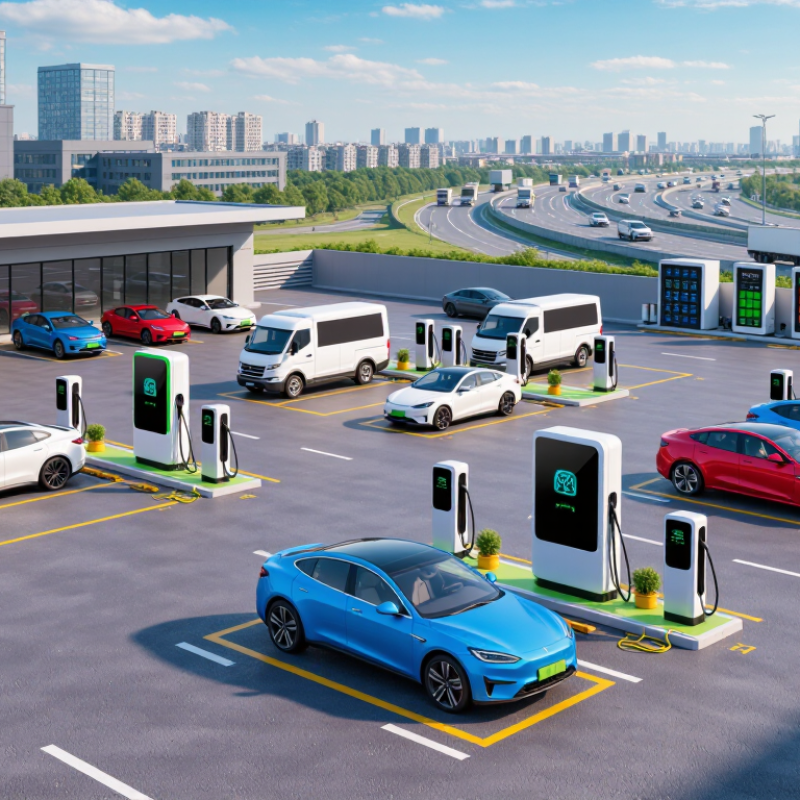
China’s EV charging station industry covers more than charging hardware. It includes AC chargers, DC fast chargers, charging cabinets, connectors, control systems, payment software, installation, maintenance, and grid coordination. The industry also serves homes, workplaces, shopping areas, highways, bus depots, and public parking facilities.
The boundary is not perfectly clean. Some manufacturers only produce equipment, while others provide full charging services. This distinction matters when comparing the top ten manufacturers.
According to the China Electric Vehicle Charging Infrastructure Promotion Alliance, China had about 3.58 million public charging piles by the end of 2024. Public facilities increased by approximately 24.7% year on year. The National Energy Administration reported around 12.82 million charging facilities nationwide during the same period, including private installations. These figures show the market’s large scale, but they also reveal a reporting problem. Different institutions use different statistical definitions.
Within this scope, manufacturers compete through output power, charging efficiency, safety protection, communication compatibility, and operating temperature range. A highway charger may require liquid cooling and high-voltage protection. A residential unit may prioritize compact design and load balancing. The International Energy Agency has also identified China as the world’s largest electric vehicle market and charging network. However, equipment quality remains uneven across regions. Buyers should examine certification records, failure rates, service response, and software reliability, not only installation volume.
Ranking China’s top ten EV charging station manufacturers requires more than counting shipped cabinets. Scale matters, but operating evidence matters more.
The International Energy Agency reported over 2.7 million public charging points in China during 2023. That huge base creates a demanding test: stable service across cities, highways, heat, dust, and winter conditions.
I would score manufacturers across five areas. These include deployment scale, charger uptime, safety certification, interoperability, and lifecycle cost.
A serious review should examine twelve months of maintenance records, not showroom demonstrations. For example, a 99% uptime claim needs supporting logs, repair intervals, and outage explanations.
The China Electric Vehicle Charging Infrastructure Promotion Alliance also provides monthly infrastructure data, useful for checking market coverage and regional growth. Power output deserves separate attention. High-power systems should maintain performance after repeated sessions, not only during a short laboratory test.
After that, technical openness becomes important. Support for current communication protocols, load management, remote diagnostics, and payment integration can reduce future replacement costs.
Service networks should offer clear response times and spare-parts availability. Energy efficiency also deserves weight, especially for busy sites operating every day.
However, no ranking is perfect. Public data can be incomplete, while smaller manufacturers may serve difficult locations quietly. I would publish the scoring method, disclose missing evidence, and review rankings annually against field performance. That is less polished, but more credible.
China’s top ten EV charging station manufacturers reflect a broad industrial ecosystem. The profiles include high-power DC specialists, compact AC suppliers, fleet-charging integrators, and software-focused equipment makers. Several manufacturers design liquid-cooled systems for busy highways. Others prioritize apartment garages, where space and electrical capacity remain limited. Some combine chargers, payment platforms, load management, and maintenance services. These differences matter more than headline output.
The International Energy Agency’s Global EV Outlook 2024 reported that China held more than half of the world’s public charging points in 2023. The China Electric Vehicle Charging Infrastructure Promotion Alliance reported that China’s public charging network exceeded three million piles during 2024.
This scale rewards manufacturers with stable components, remote diagnostics, and strong after-sales teams. In practical projects, uptime often matters more than peak charging speed. A broken connector can delay an entire fleet. The ranking is not perfect. Public market-share data can mix hardware sales, operator ownership, and contracted installations.
Tips:
China’s top 10 EV charging station manufacturers compete through products, technologies, and network solutions. Their portfolios usually include home AC chargers, commercial DC units, and high-power highway systems. A practical comparison should examine output range, connector compatibility, enclosure protection, and maintenance access. Installation experience matters. A compact wall charger may suit an apartment garage, while a 240 kW cabinet needs careful power planning, cooling, and safety clearance.
Smart charging is becoming a core capability. Load balancing can reduce peak demand across a parking facility. Remote monitoring can identify overheating, payment errors, and failed connectors before drivers arrive. Many systems support open communication protocols, cloud dashboards, and mobile applications. Some newer cabinets use liquid cooling for sustained high output. This technology improves performance, but it also adds pumps, sensors, and service requirements.
Charging network solutions extend beyond hardware. Manufacturers may provide site surveys, energy management, payment integration, fleet scheduling, and maintenance teams. Strong suppliers publish operating data and explain warranty limits clearly. Field testing should cover winter starts, rain exposure, cable handling, and repeated fast-charging sessions. A polished specification can still hide weak software or slow support. No deployment is perfect. Operators should review actual utilization every month and adjust power allocation, pricing, or charger placement when driver behavior changes.
China’s leading ten EV charging station manufacturers operate within a rapidly changing national market. Their products must align with GB/T charging standards, electrical safety rules, and strict measurement requirements. Field engineers usually check connector temperature, insulation resistance, payment accuracy, and emergency shutdown response. These details matter more than impressive advertisements.
Public charging demand is growing around highways, shopping centers, workplaces, and residential districts. High-power direct-current chargers are becoming common, while slower alternating-current units remain useful overnight. Operators increasingly connect chargers with energy management platforms. These systems balance local demand, reduce peak electricity costs, and report faults in real time. However, software compatibility remains uneven. A charger may work well but still communicate poorly with another platform.
Future growth will depend on reliability, not only charging speed. Liquid-cooled systems can support higher output, but they require careful maintenance and trained technicians. Battery storage may help busy stations avoid expensive grid upgrades. Vehicle-to-grid services also show promise, although battery warranties and user acceptance need clearer rules. Rural locations present another challenge. They need durable equipment, simple payment methods, and nearby service support. In practice, uptime can fall because of dust, water exposure, or delayed spare parts. The industry should measure these failures openly. Better data would make manufacturer comparisons more credible and help station owners choose equipment based on lifetime performance.

If you’re replacing your roof and already have solar panels installed, you’ll likely need solar panel removal and reinstall during the process. When planned correctly,
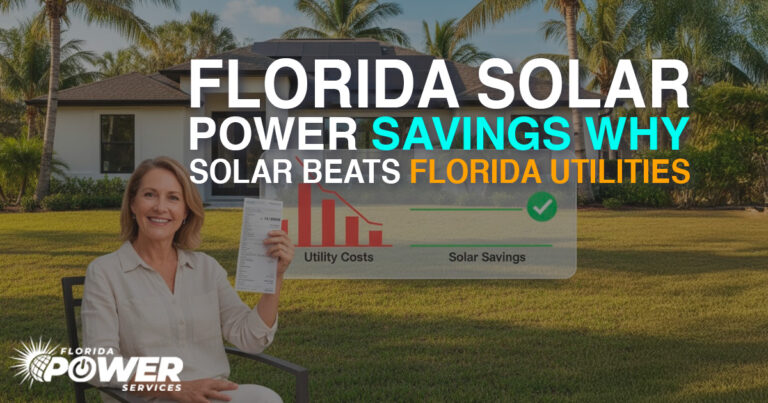
Florida homeowners are seeing their power bills rise faster than ever. Between AI data centers, fuel costs, and storm-related grid upgrades, utilities are increasing rates

⏳Go Solar Before the Deadline Permitting in Pinellas County solar jurisdictions is already experiencing serious delays. Plan reviews are running 4+ weeks behind. That means

NABCEP Certified
PV Installer

Licensed &
Insured

Systems Engineered
For A 25 Year Life Cycle

Over 4 Megawatts
Of Solar Installed

Expert Service In The
Unlikely Event Of
An Issue
Florida Power Services
"The Solar Power Company"
Florida Power Services
"The Solar Power Company"
based on 62 reviews
Florida Power Services
"The Solar Power Company"
based on 33 reviews


Utility rates rise 4–6% every year. Solar converts that rising expense into an asset that can pay for itself, and once it’s paid off, your power is essentially free. Many property owners qualify with no money out of pocket.